
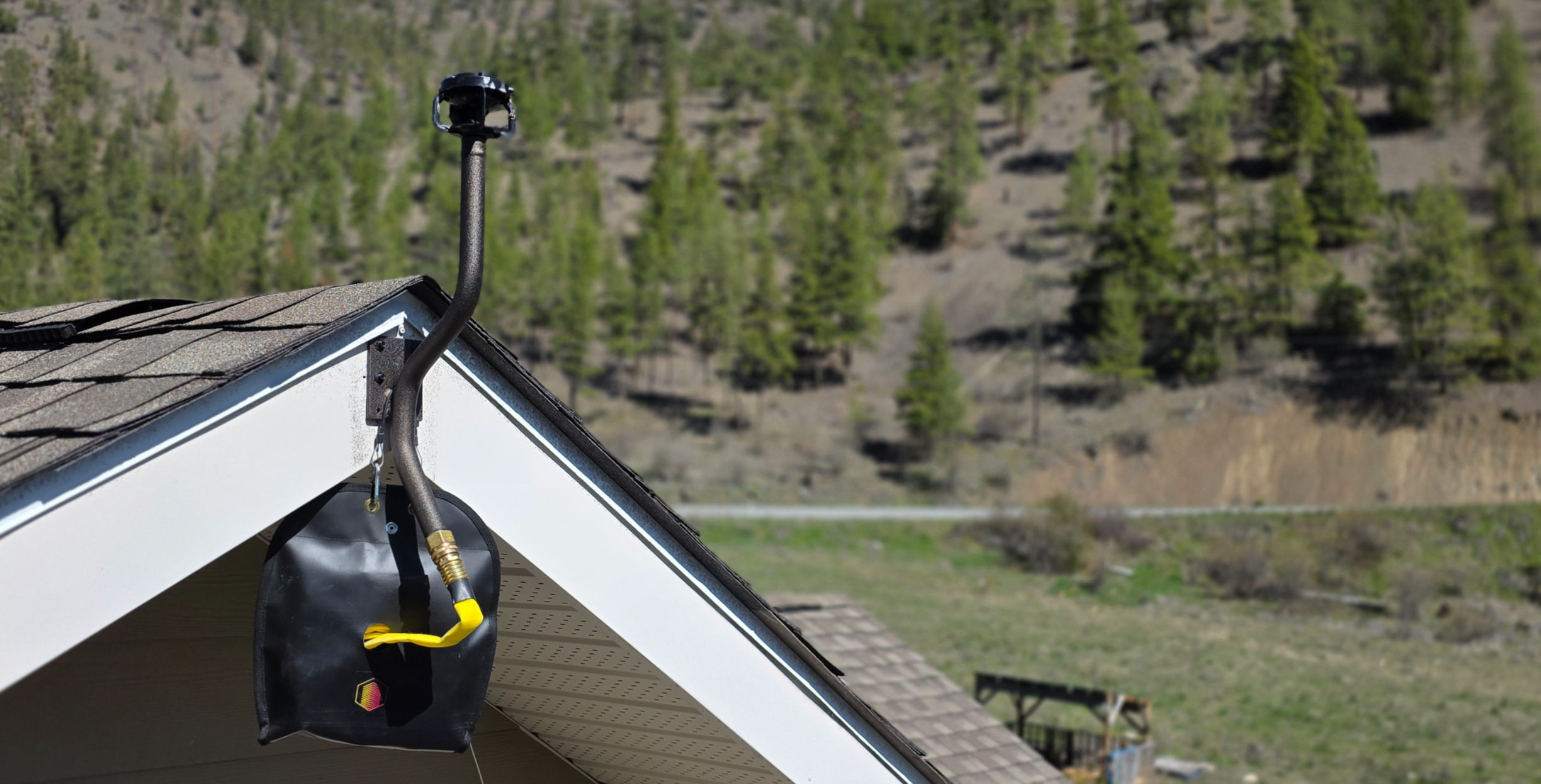

Homeowner Quick-Deploy Kit — 2-Sprinkler System
What Is Included
2 × SPS2400 Structure Protection Sprinklers
2 × Quick-Deploy Hose Bags
2 × 25-foot, ¾-inch treated forestry hoses rated to 300 PSI
2 × ground-operated release cables
Mounting hardware
Install before wildfire season. Deploy safely from the ground when conditions change.
The Homeowner Quick-Deploy Rooftop Sprinkler Kit is a complete two-sprinkler system designed to help reduce the risk of structure ignition from wind-driven embers and small spot fires. The sprinklers are installed at opposite ends of the roof in advance, so you do not need to climb onto the roof during an emergency.
How the Quick-Deploy System Works
Install a sprinkler and hose bag near each end of the roof before wildfire conditions arrive.
When activation is appropriate, pull each release cable from the ground to lower the connected hose.
Connect the hoses to a suitable water supply, timer, manifold, or pump.
Activate the water and verify that both sprinklers rotate freely and provide the intended coverage.
The hose remains connected to the release cable, allowing it to be pulled down in the event it gets caught in a gutter or secondary roof line. The hose bags are reloadable and reusable after deployment.
Coverage and Water Requirements
Each SPS2400 can provide approximately 1,500 square feet of coverage under suitable pressure, placement, wind, and roof conditions. Operating range is approximately 40–60 PSI with flow of 1.69–4.02 GPM per sprinkler. A typical two-sprinkler setup may use approximately 6 GPM, but actual performance depends on the available water supply.
Before relying on the system, test both sprinklers together. Confirm rotation, coverage, pressure, hose condition, connections, and water availability. Some properties may require a dedicated pump, storage tank, lake/pool/river supply, or professionally designed system.
What Rooftop Sprinklers Are Designed to Do
The system helps wet the roof and nearby surfaces, increase local humidity, and reduce the chance that wind-driven embers or small spot ignitions find dry, vulnerable areas. It is targeted structure protection—not a system designed to stop an advancing wildfire front.
Sprinklers Are One Layer—Not the Entire Solution
Even with good sprinkler coverage, wind, roof shape, water limitations, heat, debris, and sheltered areas can leave dry spaces and vulnerabilities. Rooftop sprinklers work best as part of a layered wildfire protection plan that includes:
FireSmart vegetation management and defensible space
A non-combustible zone immediately around the structure
Fire-resistant roofing, siding, vents, soffits, windows, and decks
Removal of needles, leaves, and combustible debris from roofs, gutters, decks, and around the foundation
Protection of ember-entry points and other structure vulnerabilities
A tested water supply, evacuation plan, and regular system maintenance
Sprinklers do not make a home fireproof and do not replace firefighters, evacuation orders, FireSmart work, or home hardening. Their purpose is to add a practical, pre-deployed layer of protection and provide a system that homeowners or responding structure-protection crews can activate when appropriate and permitted.
Built for Canadian Wildfire Conditions
Designed by a Canadian firefighter and made in British Columbia since 2021. The system uses standard hose connections so it can work with common homeowner water supplies and support real-world structure-protection operations.
Prepare early. Test annually.
Prevent • Protect • Defend