
Understanding Wildfire Risk
Wildfire preparedness begins with understanding how homes actually ignite.

Wildfire Risk Starts at the Structure
Wildfire losses aren’t caused by a single wall of flame.
In the wildland–urban interface (WUI), homes are most often lost when ember exposure, radiant heat, and small vulnerabilities overwhelm a structure faster than firefighting resources can respond.
Wind-driven embers land quietly on roofs, vents, decks, and attachments. Radiant heat weakens materials and increases ignition risk. When these factors combine, structure ignition can occur long before flames reach the home — often out of sight and without warning.
Wildfire Protection Systems focuses on helping homeowners understand this reality early, so risk can be reduced before evacuation becomes necessary.
How Wildfires Behave in the Wildland–Urban Interface (WUI)
Wildfires are not uniform or predictable. Their behavior is shaped by environmental and structural factors that change as fire moves closer to communities.
WIND
Wind is the most significant driver of wildfire spread. It carries embers long distances ahead of the fire front, increases flame intensity, and pushes fire into vulnerable parts of a structure. During extreme wind events, suppression efforts are often limited or impossible.
SLOPE and TERRAIN
Fire spreads uphill faster than downhill. Heat rises, preheating fuels and structures above the fire. Homes located above slopes or in draws often experience higher radiant heat exposure and increased ignition risk.
FUEL CONTINUITY
When vegetation connects forest, yard, and structure, fire can move uninterrupted. Continuous fuels allow flames and embers to reach buildings more easily. Breaking this continuity reduces flame length and radiant heat exposure.
FIRE WEATHER
Low humidity, high temperatures, and unstable atmospheric conditions increase fire intensity and ember production. These conditions can turn small fires into fast-moving, high-impact events.
Ember Risk: The Primary Cause of Home Loss
In most destructive wildfires, homes are not destroyed by direct flame contact.
They are lost to wind-driven embers.
What Are Embers?
Embers are burning fragments of vegetation or building material that can be carried hundreds — sometimes thousands — of meters ahead of the main fire. They land on or near structures and ignite vulnerabilities that may go unnoticed under normal conditions.
Common Ember Ignition Points
-
Roof valleys and roof-to-wall intersections
-
Gutters filled with leaves or needles
-
Vents without ember-resistant screening
-
Deck surfaces and gaps
-
Siding that contacts soil or mulch
-
Stored combustible materials near the home
A single ember can ignite a structure quietly and out of sight.
Why Embers Overwhelm Suppression
During major wildfire events:
-
Firefighting resources are spread thin
-
Access may be restricted or unsafe
-
Water supply can be limited
-
Multiple structures ignite at the same time
This is why reducing ember vulnerabilities before fire arrives is one of the most effective wildfire mitigation actions a homeowner can take.
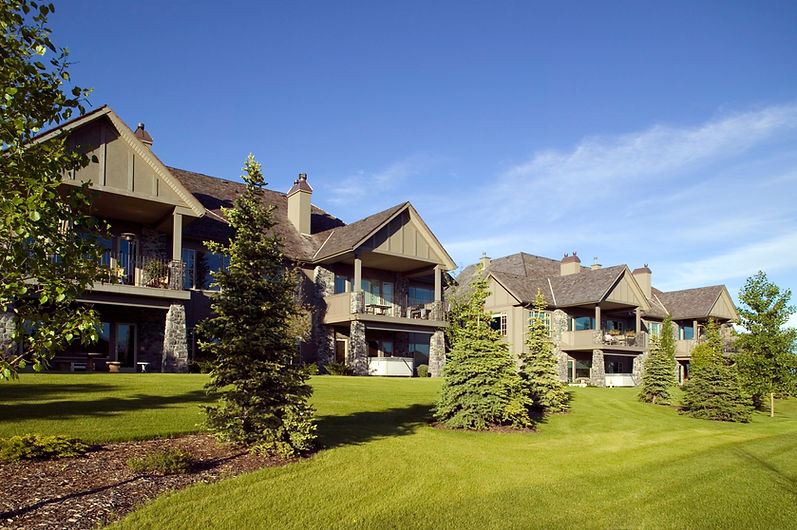
Why Firefighting Alone Can’t Protect Every Home
Firefighters make difficult triage decisions during wildfire events.
They must prioritize life safety first — and when resources are limited, not every structure can be defended.
Roads may be blocked. Power may be out. Water systems may fail. In many cases, fire behavior outpaces response capacity.
This is not a failure of firefighting — it’s the reality of modern wildfire conditions.
Wildfire resilience must begin at the home, long before an evacuation order is issued.
Defensible Space: Reducing Heat, Flame, and Ember Exposure
Defensible space is the managed area around a structure designed to reduce fire intensity and give firefighters safer conditions to work in.
It does not mean removing all vegetation.
It means intentional spacing, selection, and maintenance.
WFPS05.jpg)

Add a general description of the items listed below. You can introduce the list and include any relevant information you want to share. Double click to edit the text.
The Three Defensible Space Zones
01
Immediate Zone (0–5 ft / 0–1.5 m)
The most critical zone for ember protection.
This area focuses on eliminating direct ignition opportunities against the structure.
03
Extended Zone (30–100+ ft / 9–30+ m)
This zone influences fire behavior before it reaches the structure, helping slow fire spread and reduce intensity.
02
Intermediate Zone (5–30 ft / 1.5–9 m)
This zone reduces flame length and radiant heat exposure by spacing and maintaining vegetation.

What Defensible Space Actually Does
-
Lowers flame intensity near structures
-
Reduces radiant heat exposure
-
Slows fire spread
-
Improves firefighter safety and effectiveness
-
Increases the effectiveness of other mitigation measures
Defensible space works best when combined with home hardening and informed preparedness.